


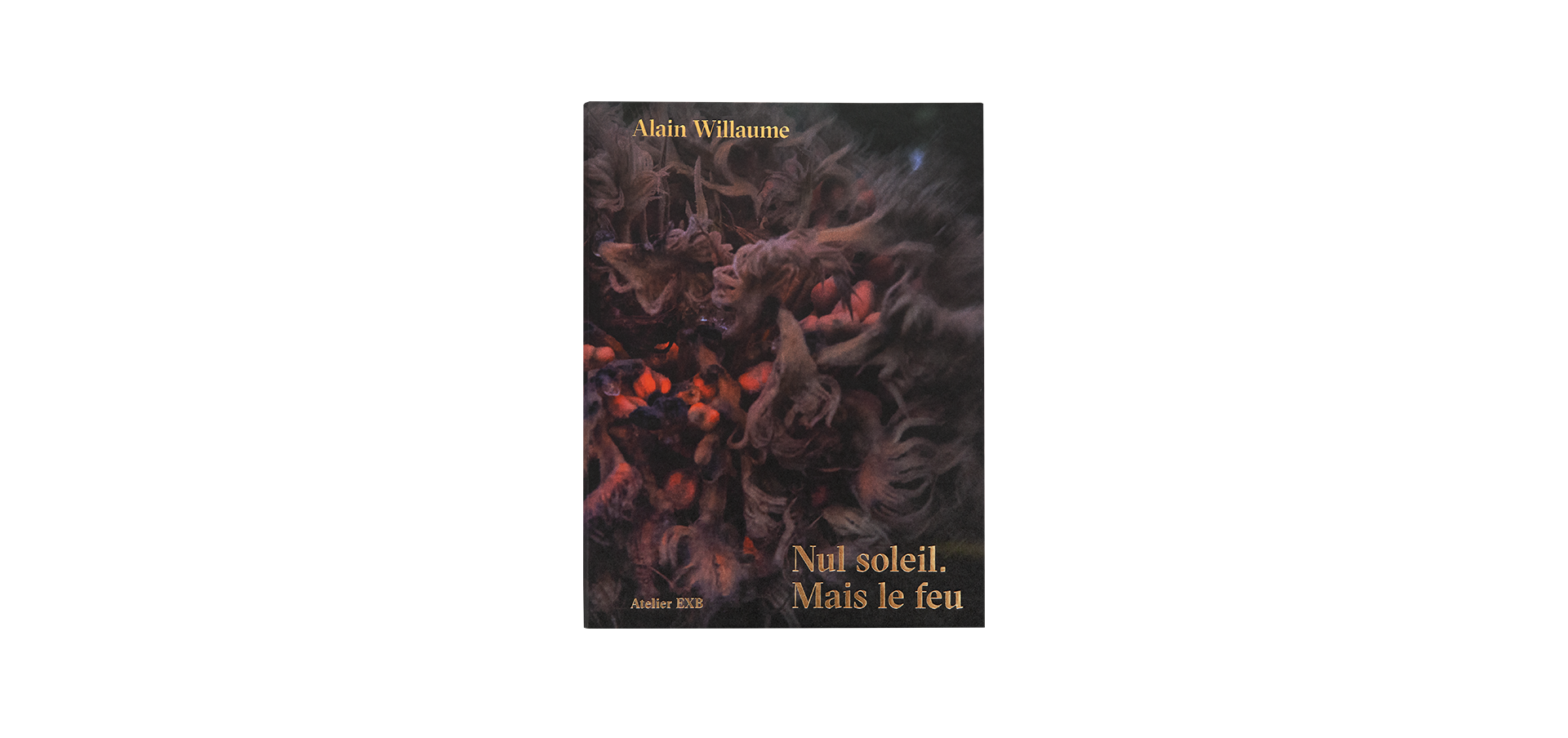
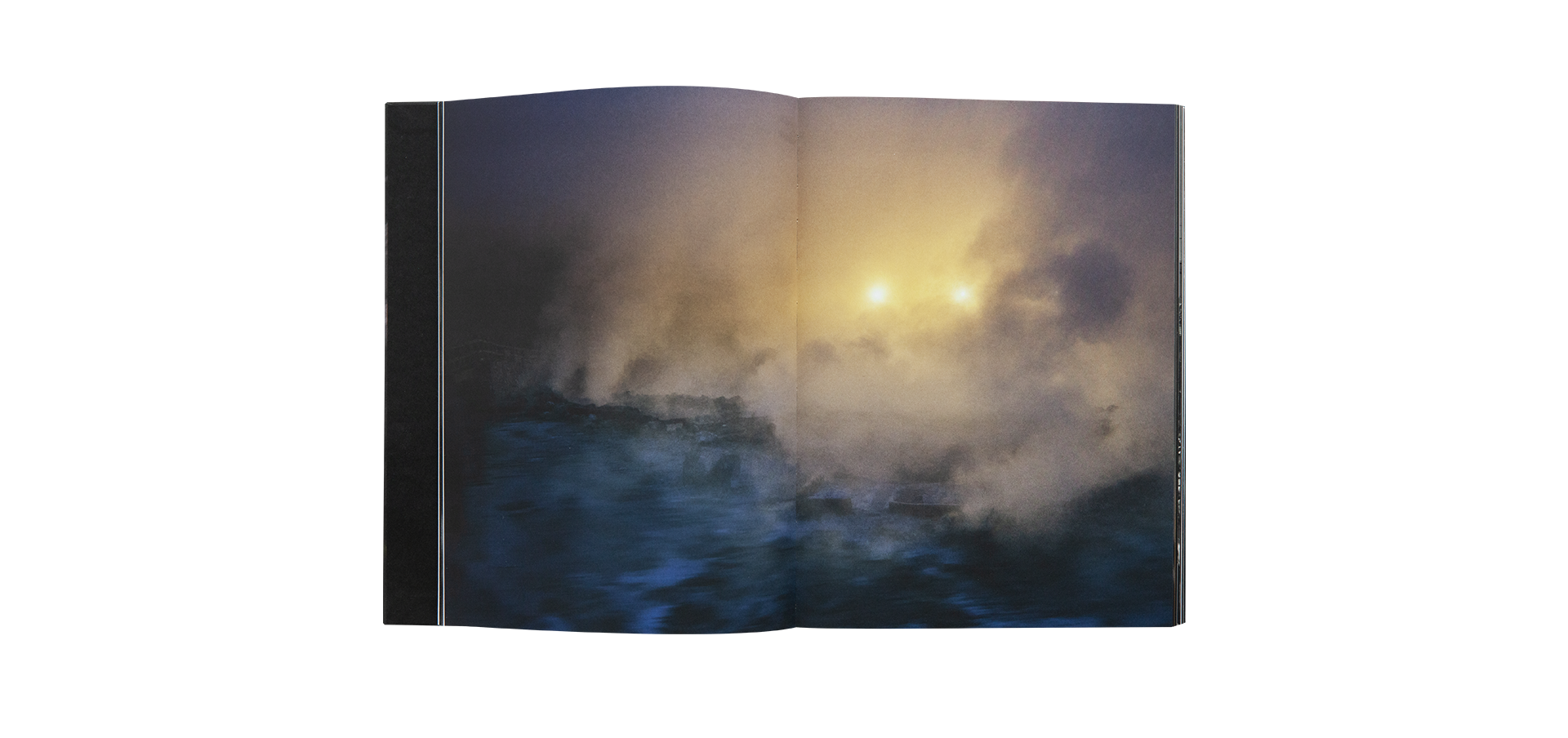
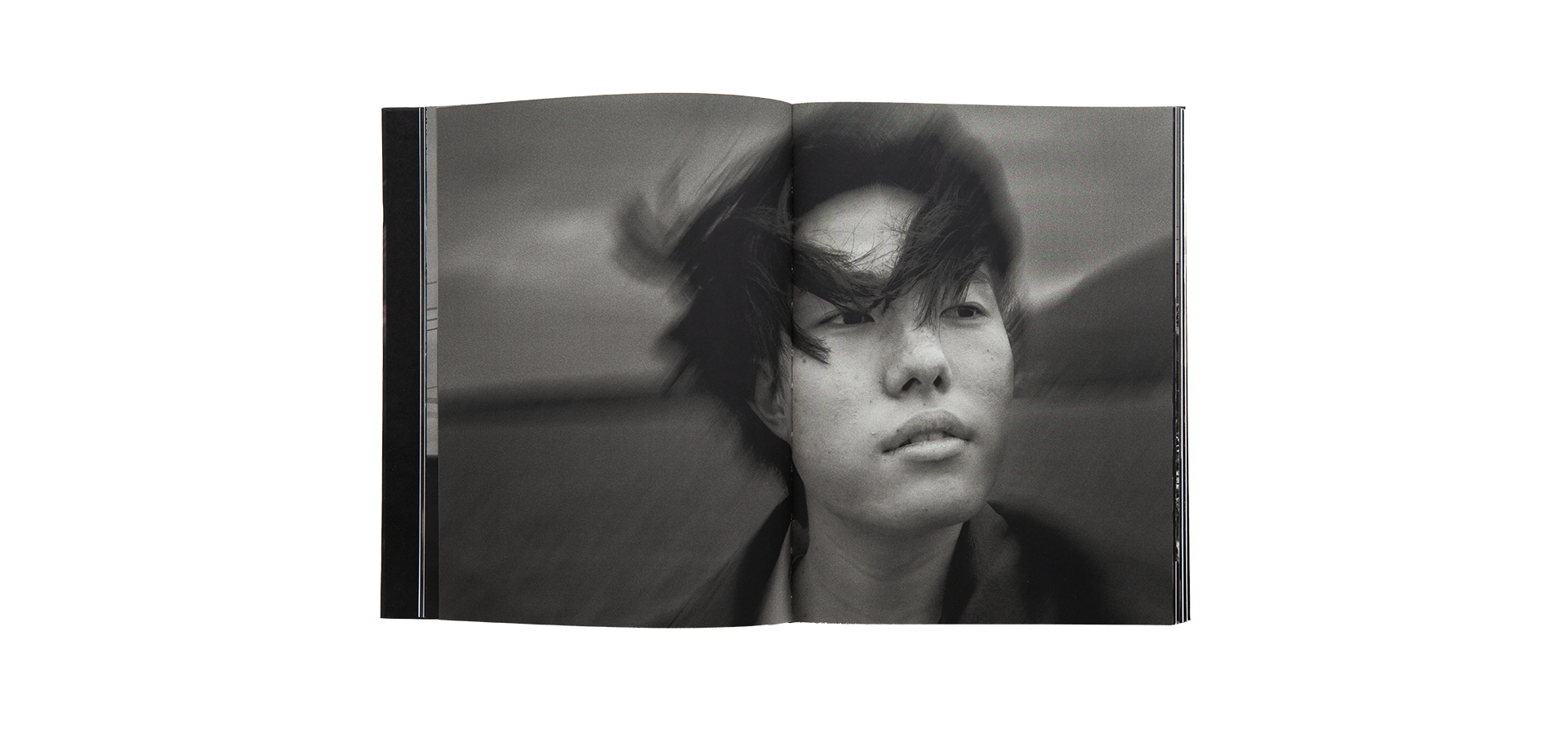
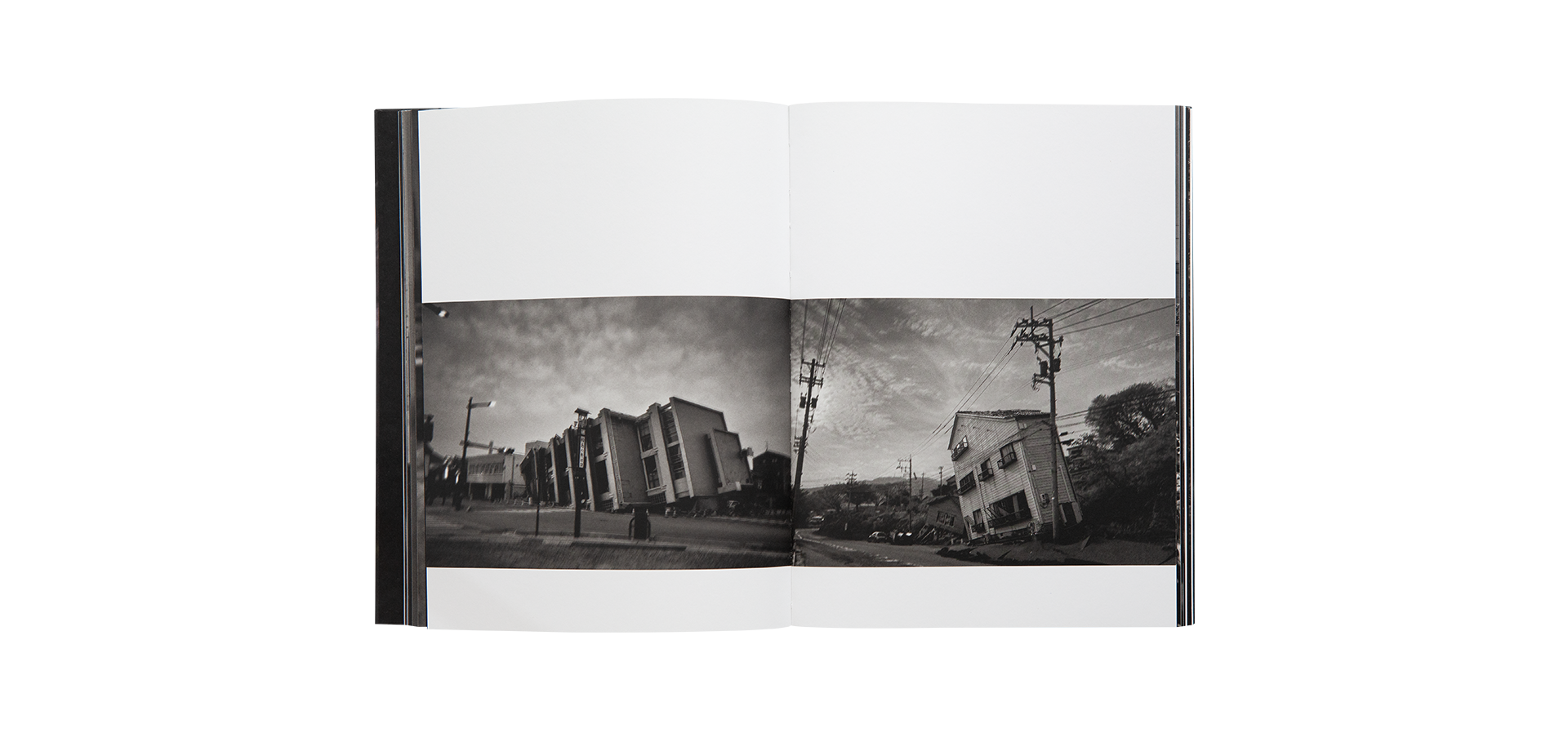
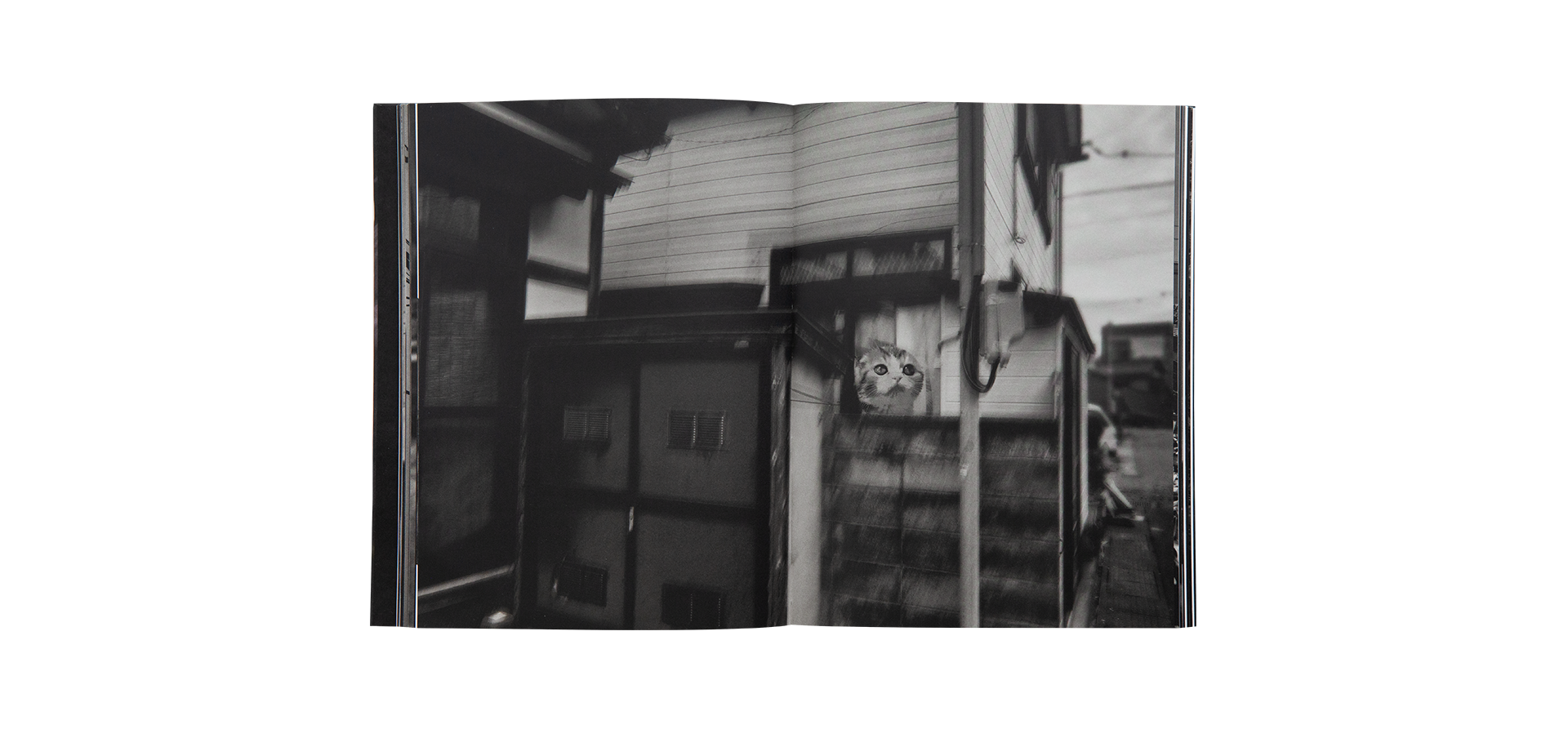
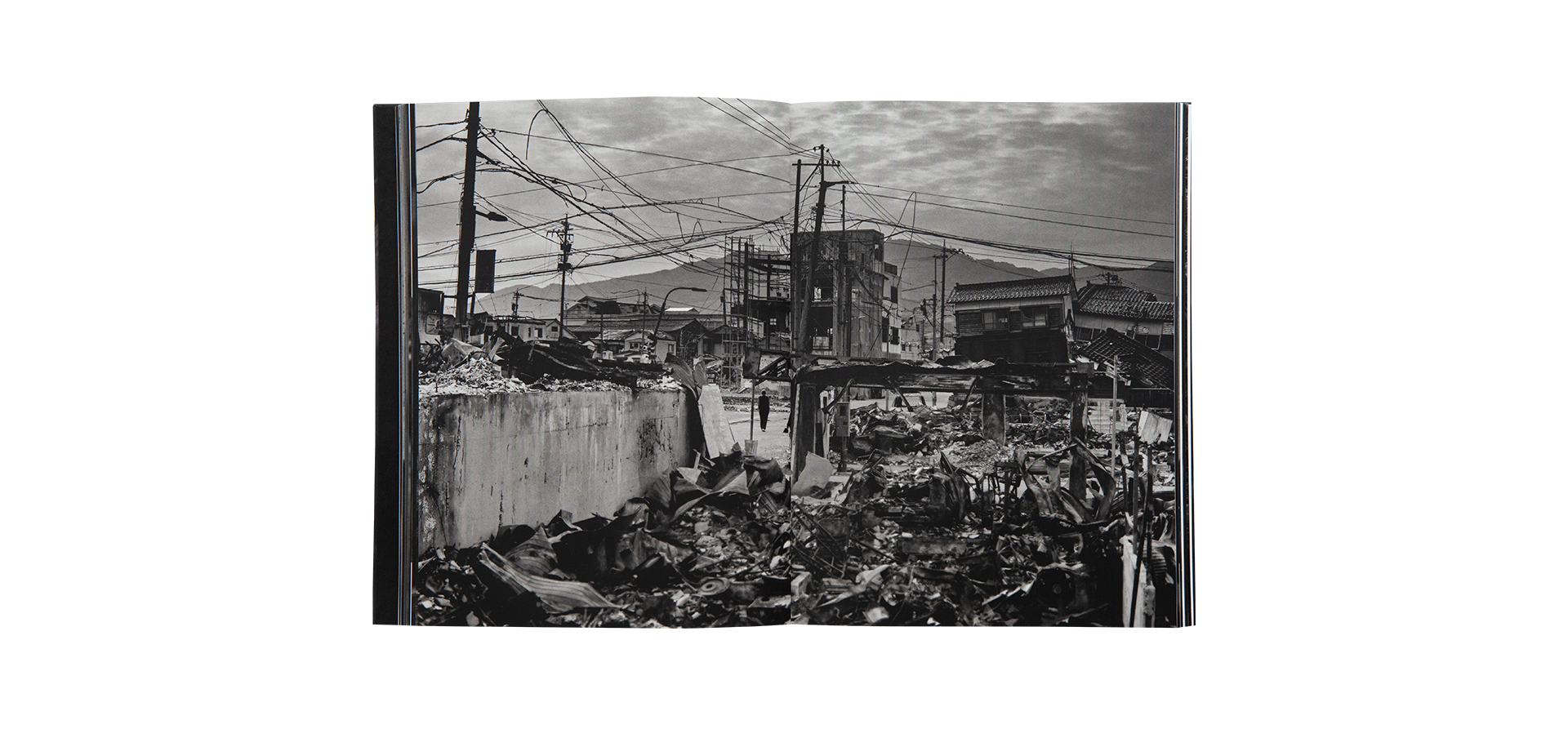
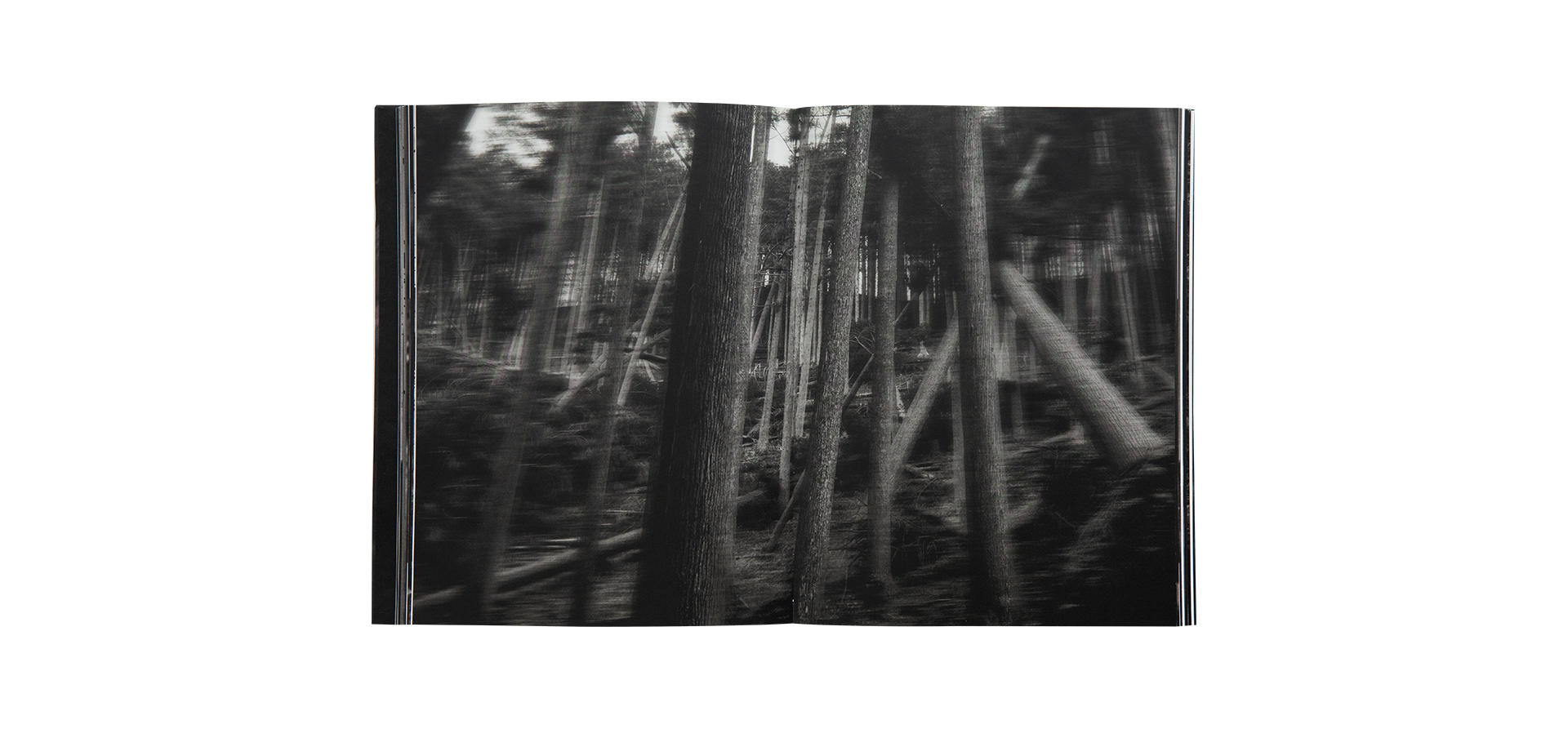
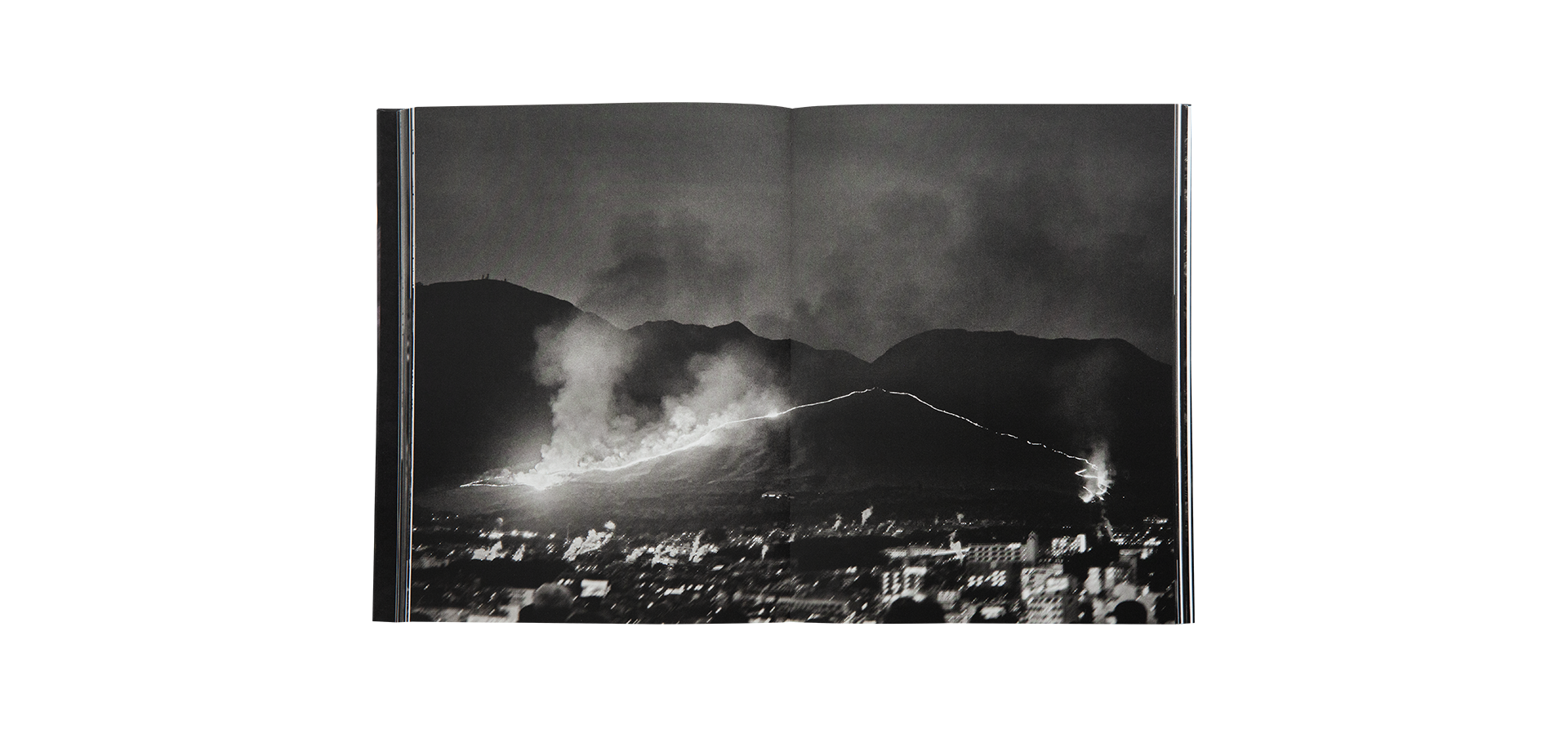
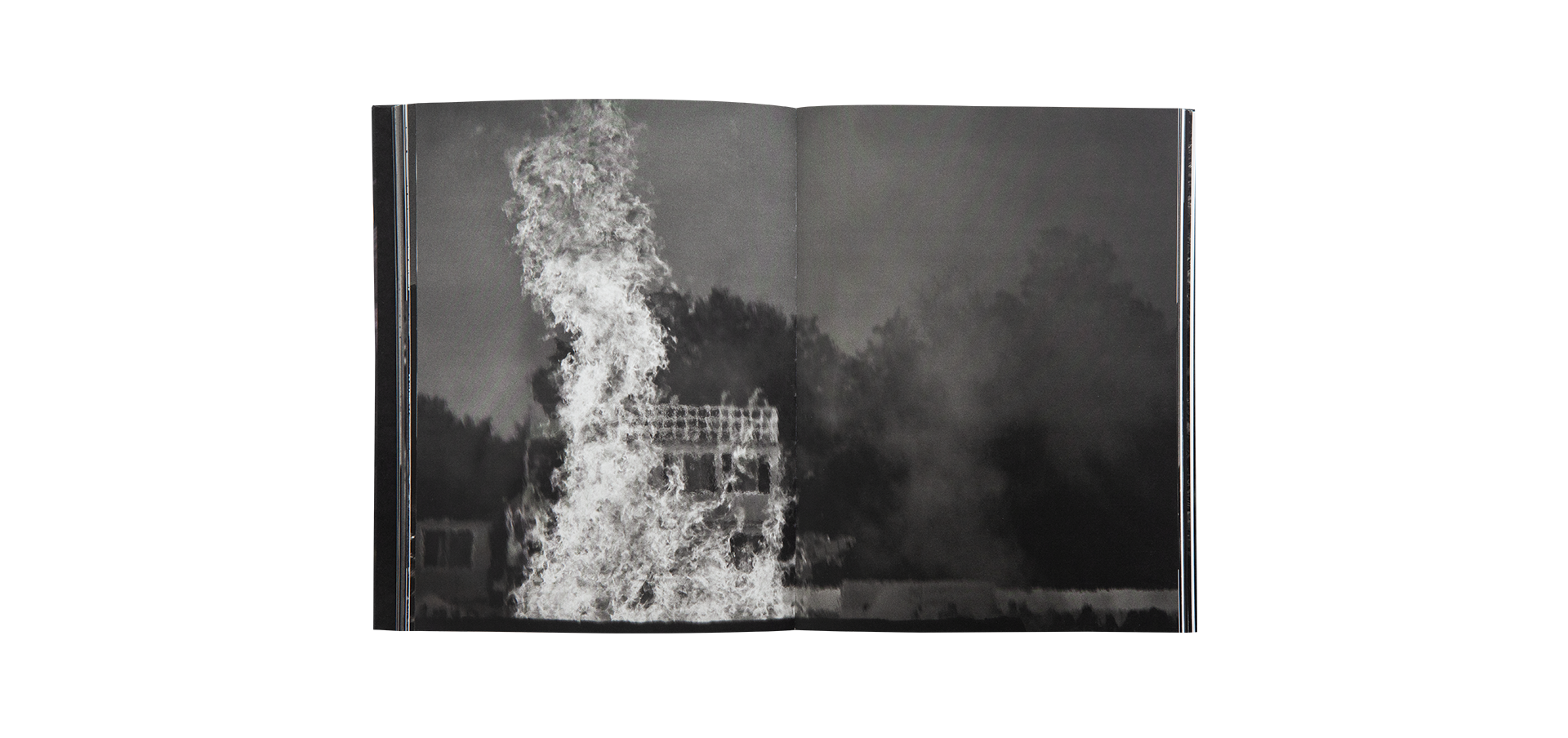
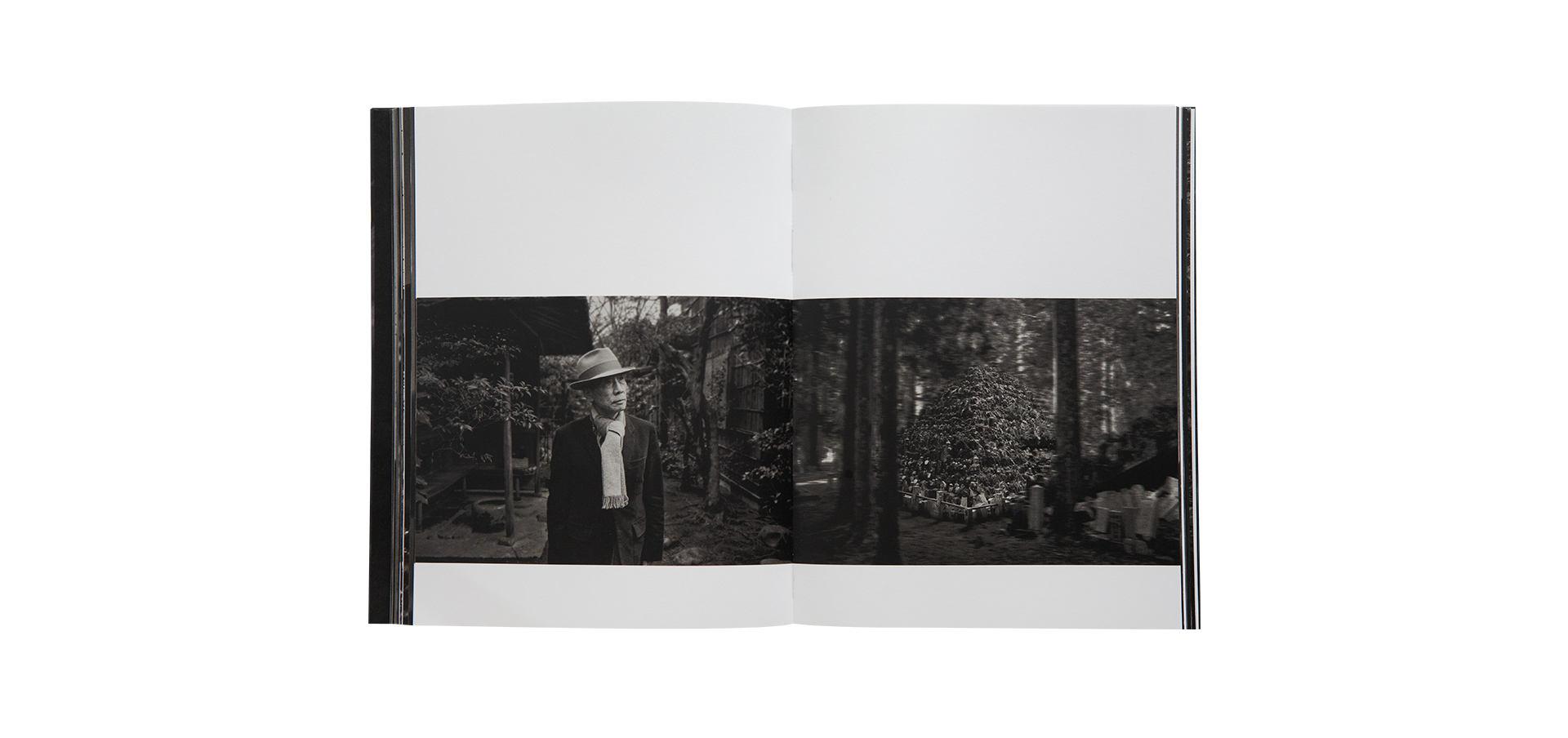
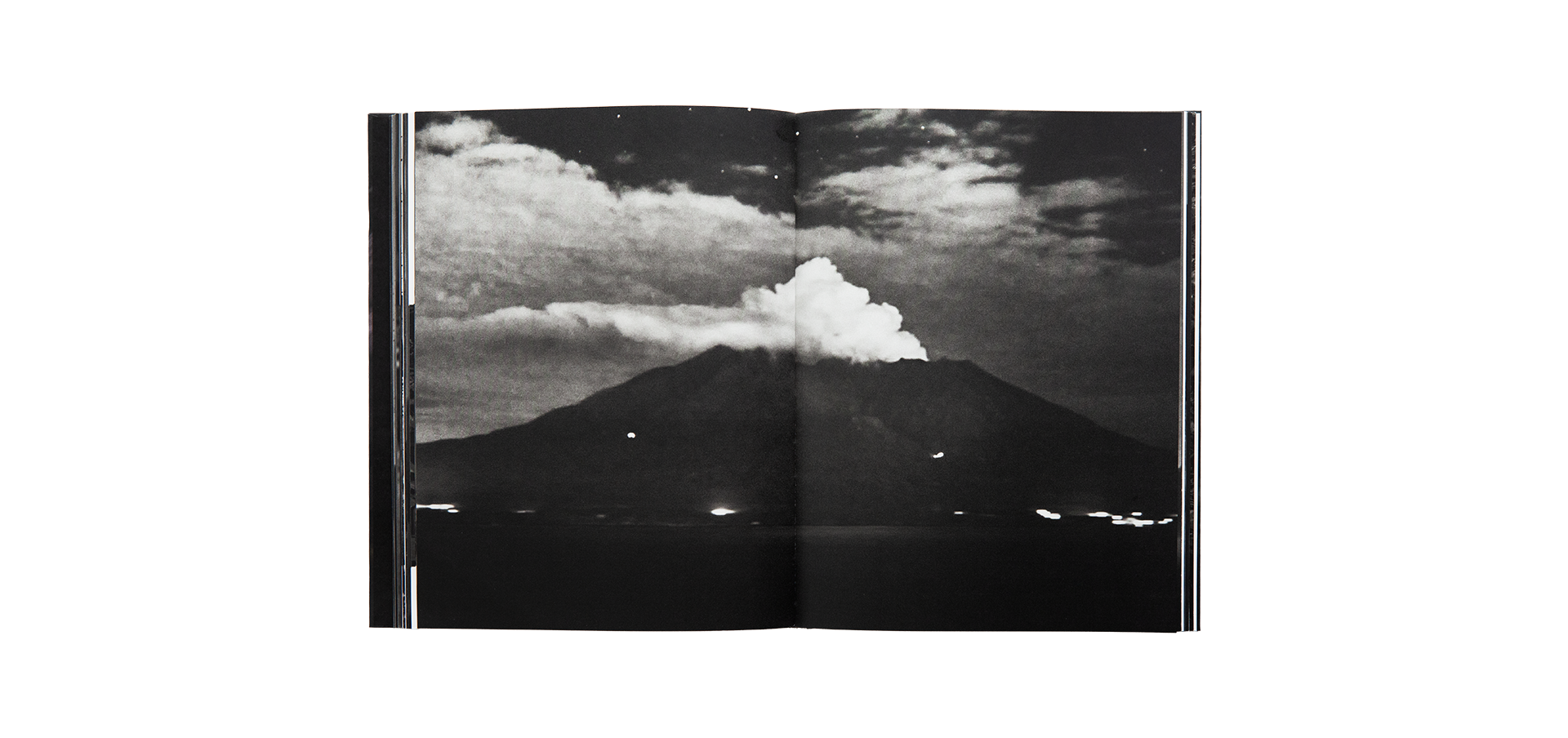
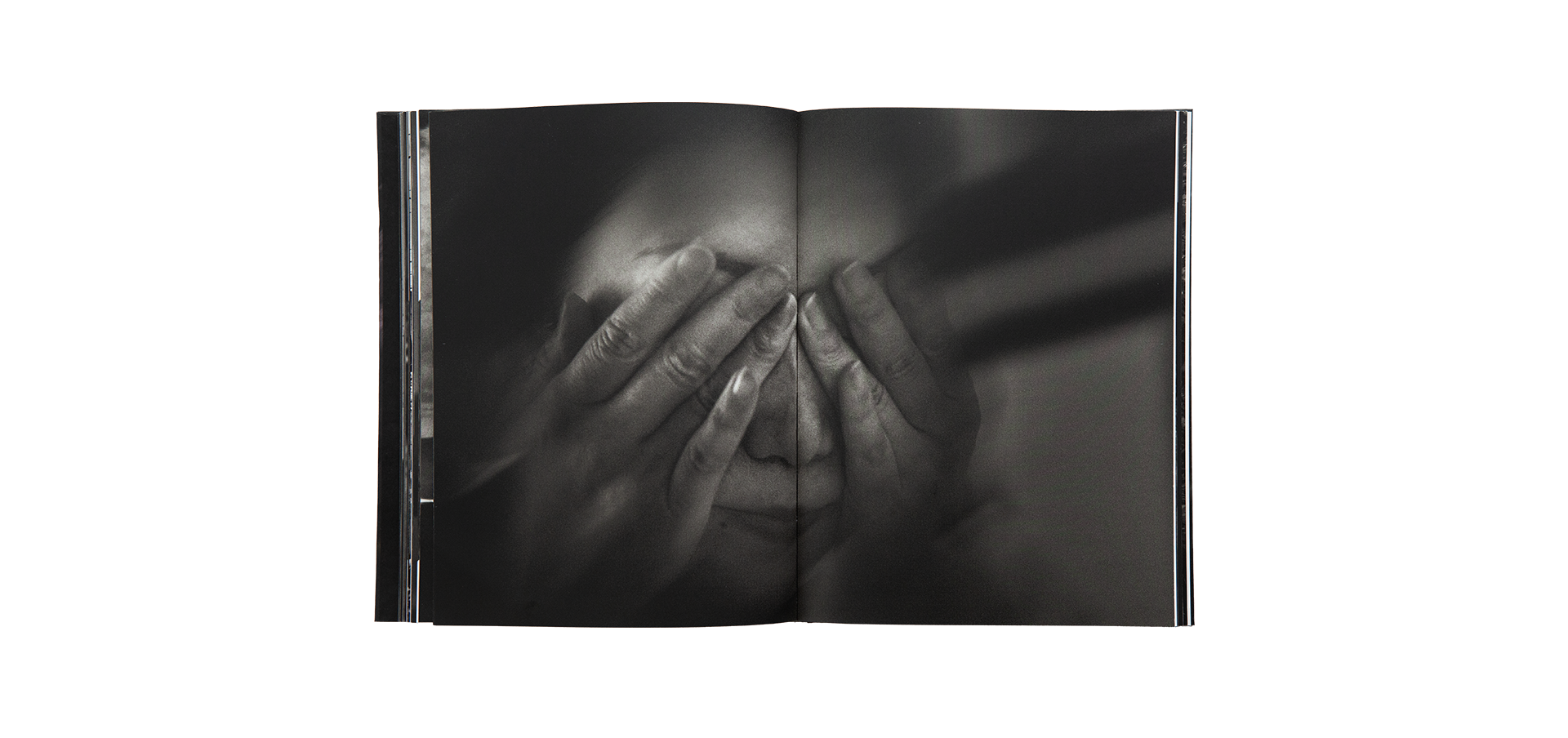
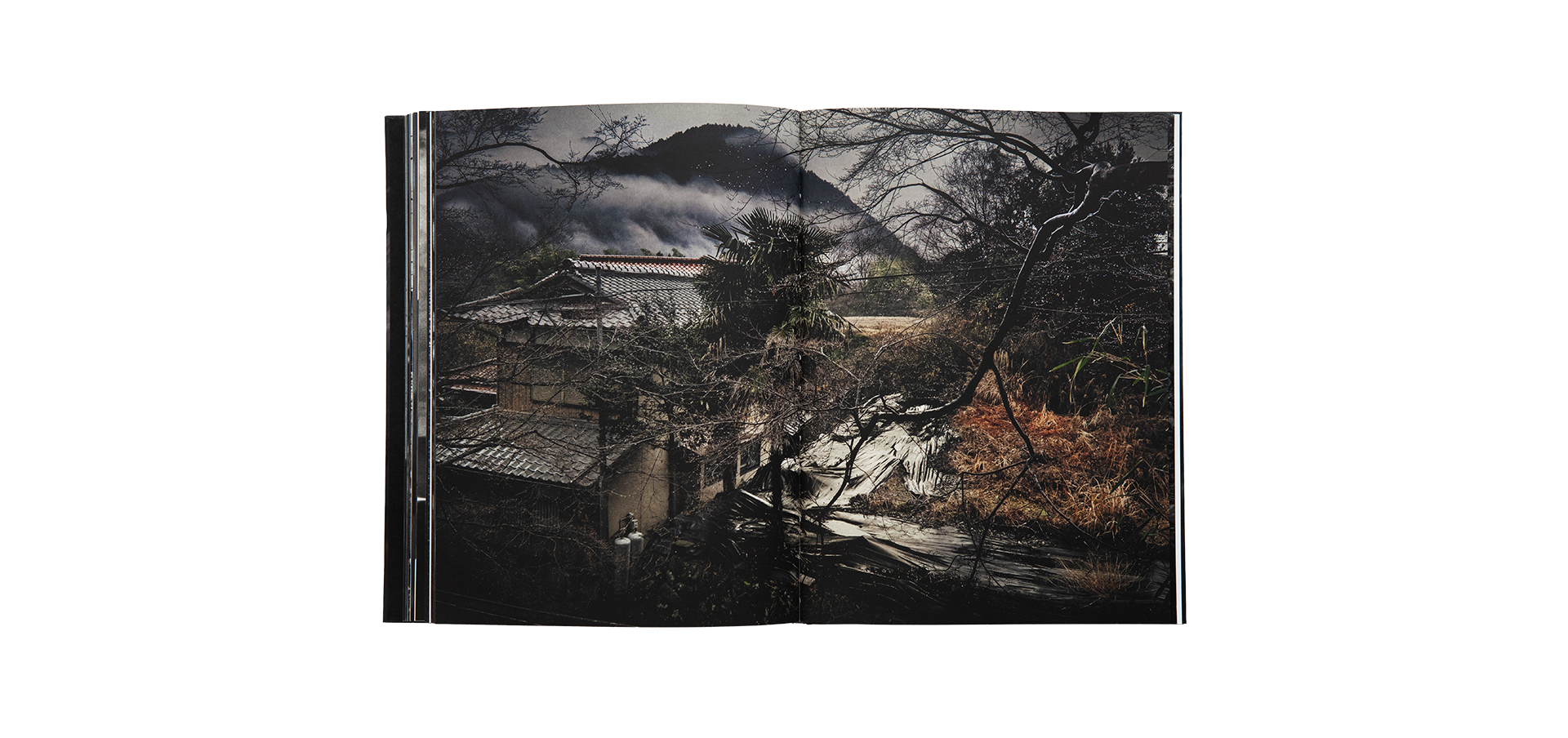

Alain Willaume spent the first five months of 2024 in residence in Kyoto. He undertook several exploratory trips to the regions of Kyushu, Noto, Kansai, and Chugoku. The discovery of a child’s boro—a small jacket patched by mothers from one generation to the next—at a flea market further deepened his curiosity and fascination with this country, where the beauty of a garment’s wear and tear can reflect both maternal affection and the Japanese aesthetic of wabi-sabi. A wandering photographer, he captures enigmatic landscapes populated throughout the pages by ghostly apparitions. The unsettling power and extreme fragility evoked by his encounter with boro shine through. The black-and-white texture of the images, punctuated by rare shots in muted colors, immerses the reader in the dim light of the Japanese winter. The sensory becomes texture: damp atmospheres, shores and streets that seem buffeted by an invisible wind, the remains of houses ravaged by an earthquake, dunes where fragile human silhouettes occasionally stand out. Alain Willaume weaves a world where uncertainty reigns. Nature is subject to subterranean forces; everything seems to waver before our eyes.
In this hardcover album—designed to open fully—most of the photographs are reproduced across two pages, offering the reader a cinematic journey. Alain Willaume captures the ephemeral nature of things, yet also their capacity to inspire wonder. His images unfold like an imaginary narrative punctuated by tremors and fissures, revealing a twilight Japan imbued with profound poetry. A sunless Japan where the contours of reality blur. To accompany this feverish journey, writer Ryoko Sekiguchi offers her own perspective on “the liquefaction of images” with an unpublished text addressing themes dear to her: the impermanence of things and ghostly presences.
Alain Willaume spent the first five months of 2024 in residence in Kyoto. He undertook several exploratory trips to the regions of Kyushu, Noto, Kansai, and Chugoku. The discovery of a child’s boro—a small jacket patched by mothers from one generation to the next—at a flea market further deepened his curiosity and fascination with this country, where the beauty of a garment’s wear and tear can reflect both maternal affection and the Japanese aesthetic of wabi-sabi. A wandering photographer, he captures enigmatic landscapes populated throughout the pages by ghostly apparitions. The unsettling power and extreme fragility evoked by his encounter with boro shine through. The black-and-white texture of the images, punctuated by rare shots in muted colors, immerses the reader in the dim light of the Japanese winter. The sensory becomes texture: damp atmospheres, shores and streets that seem buffeted by an invisible wind, the remains of houses ravaged by an earthquake, dunes where fragile human silhouettes occasionally stand out. Alain Willaume weaves a world where uncertainty reigns. Nature is subject to subterranean forces; everything seems to waver before our eyes.
In this hardcover album—designed to open fully—most of the photographs are reproduced across two pages, offering the reader a cinematic journey. Alain Willaume captures the ephemeral nature of things, yet also their capacity to inspire wonder. His images unfold like an imaginary narrative punctuated by tremors and fissures, revealing a twilight Japan imbued with profound poetry. A sunless Japan where the contours of reality blur. To accompany this feverish journey, writer Ryoko Sekiguchi offers her own perspective on “the liquefaction of images” with an unpublished text addressing themes dear to her: the impermanence of things and ghostly presences.
Swiss biding, 19 x 25,3 cm
176 pages
88 colour and B&W photographs
Photographs
Alain Willaume
Texts
Ryoko Sekiguchi
Véronique Brindeau
With the support of
the Fondation franco-japonaise Sasakawa
and Nippon Express France
Exhibition
22 mai – 5 septembre 2026 :
Stimultania, Strasbourg
Spring 2027 :
Lumière d’Encre, Céret
Fall 2027 :
Hôtel Fontfreyde, Clermont-Ferrand
Spring 2028 :
Carré d’Art, Chartres de Bretagne
Link to the video bookflip
 you may also like
 see the whole catalog