


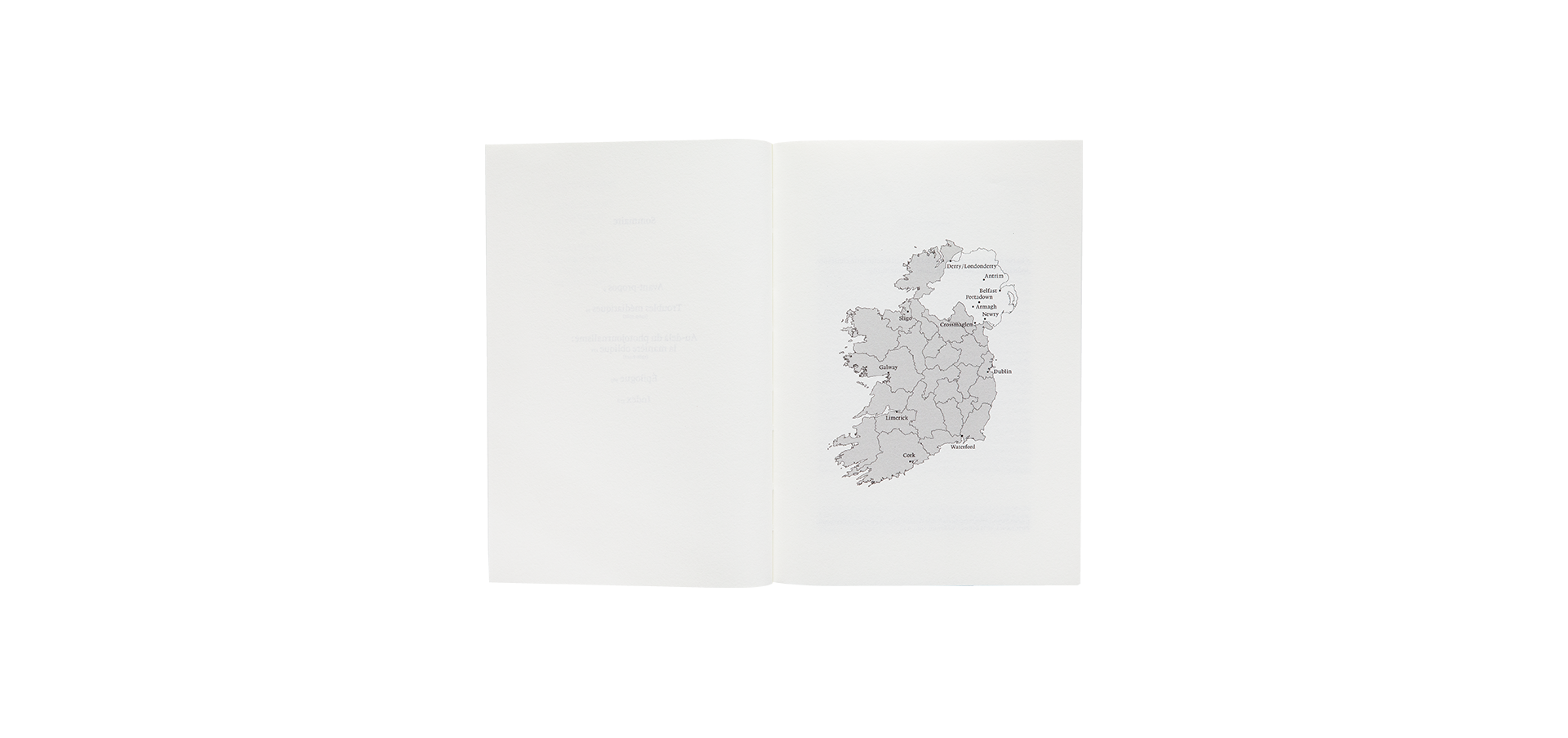
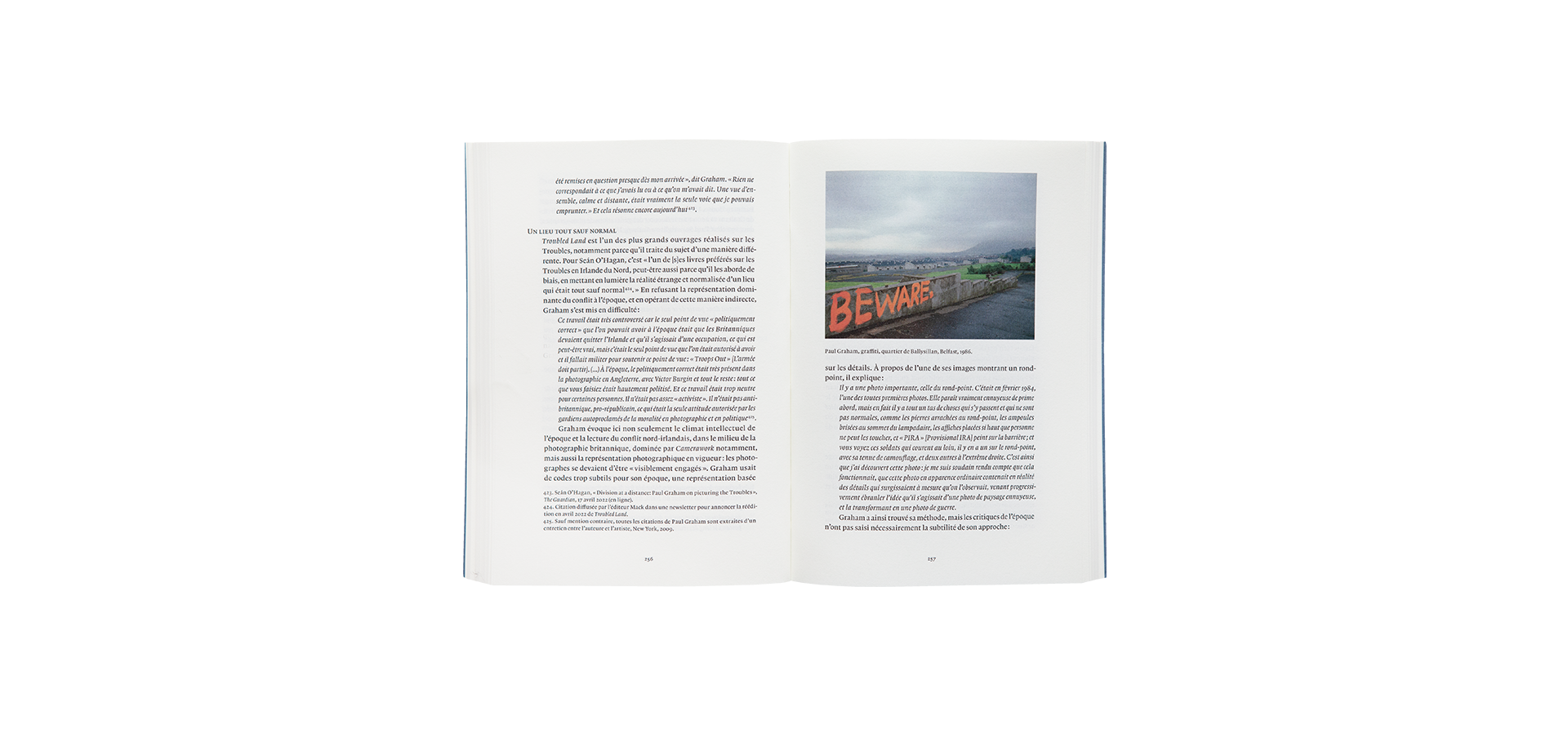
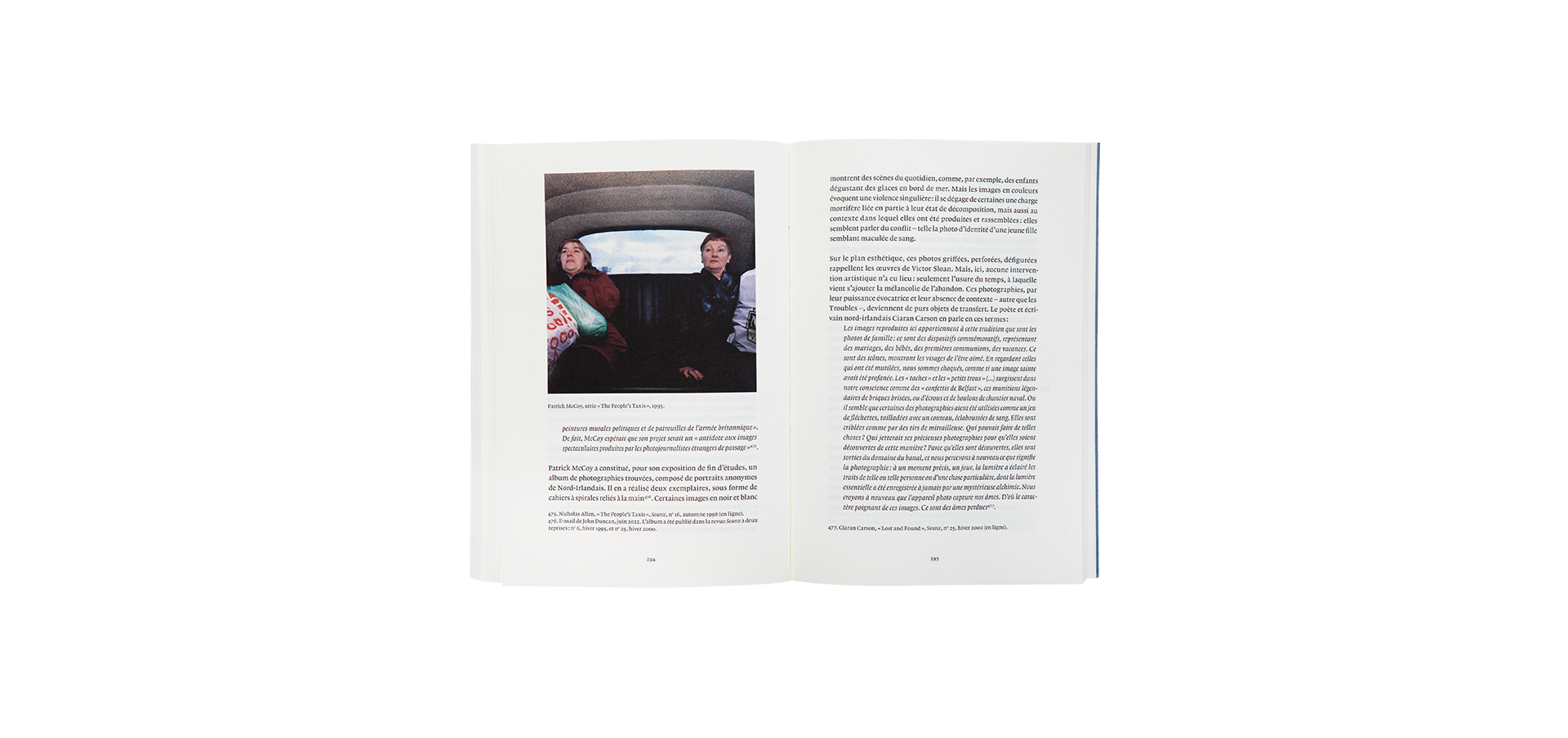
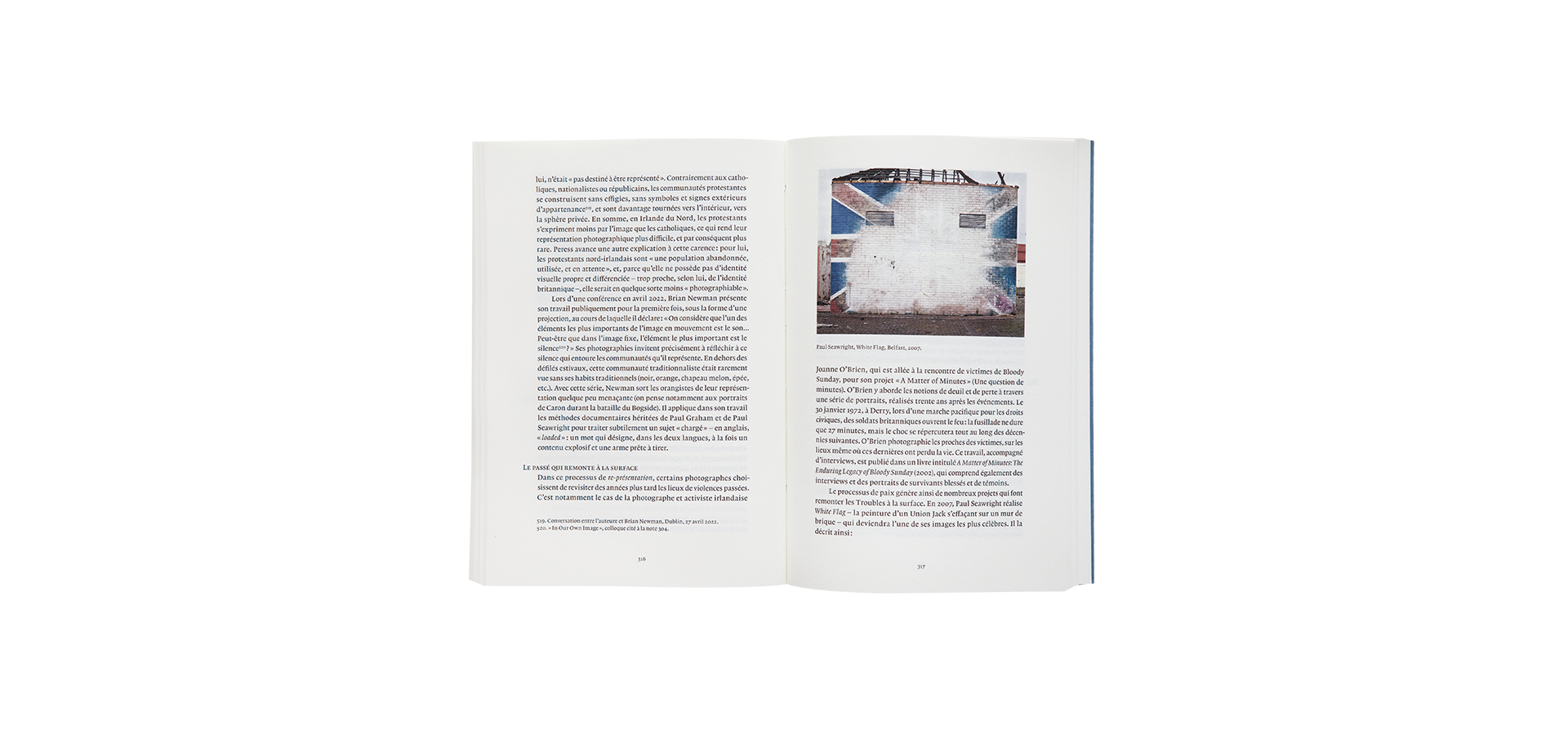
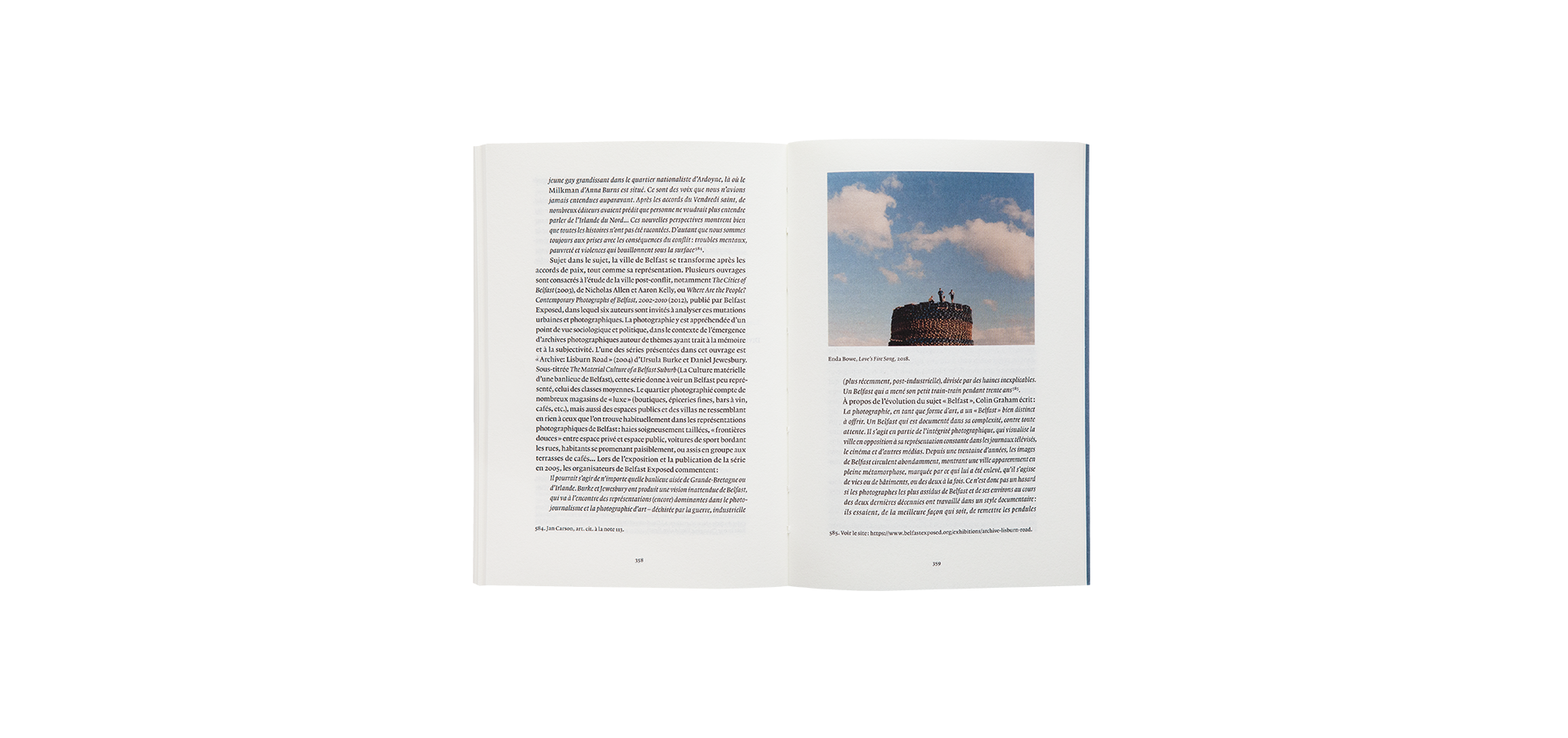

For nearly thirty years, Northern Ireland was torn apart by one of the most violent conflicts of the 20th century in Europe, “The Troubles” (1969-1998), which claimed nearly 4,000 lives. These years of extreme tension gave rise to an exceptional body of work by photographers from around the world.
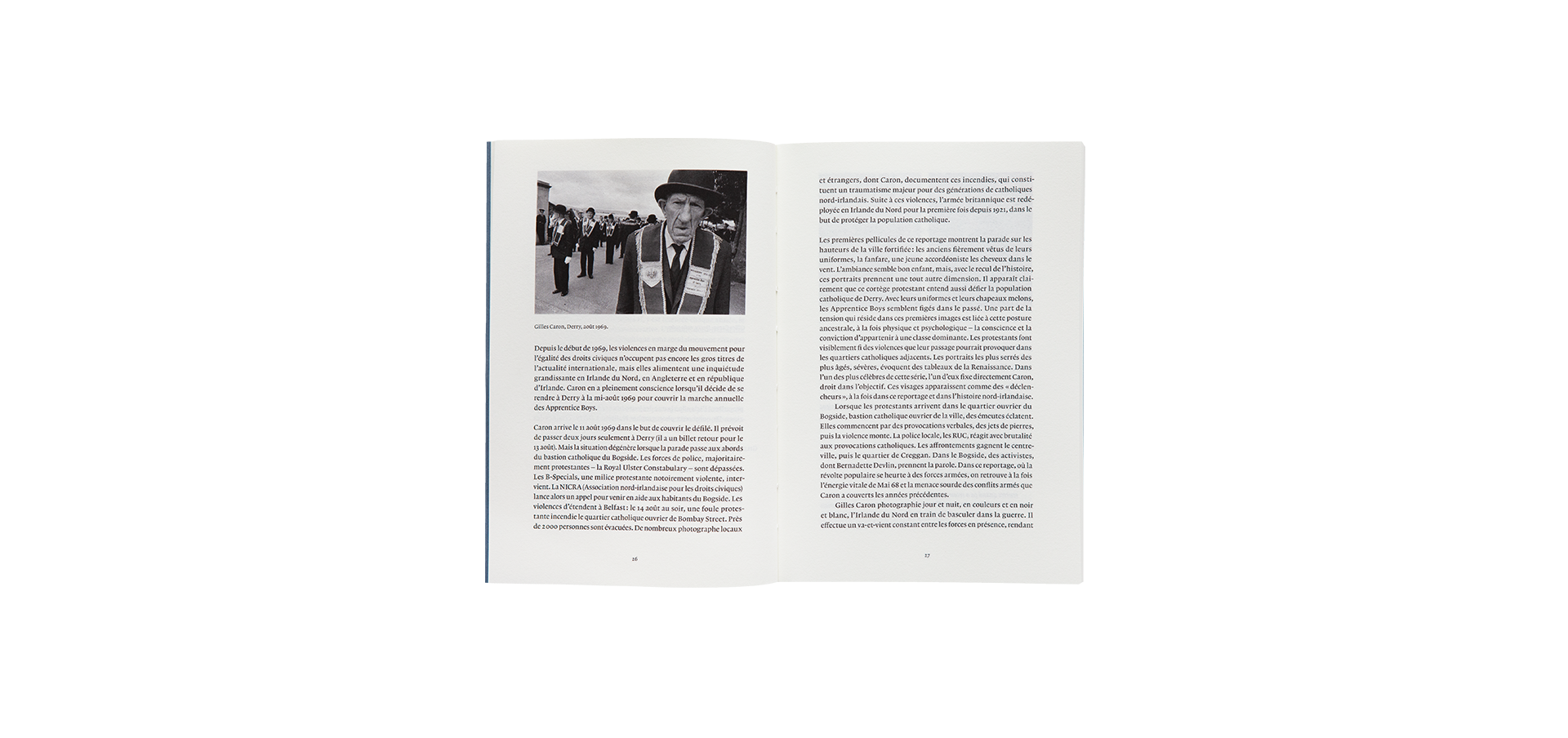
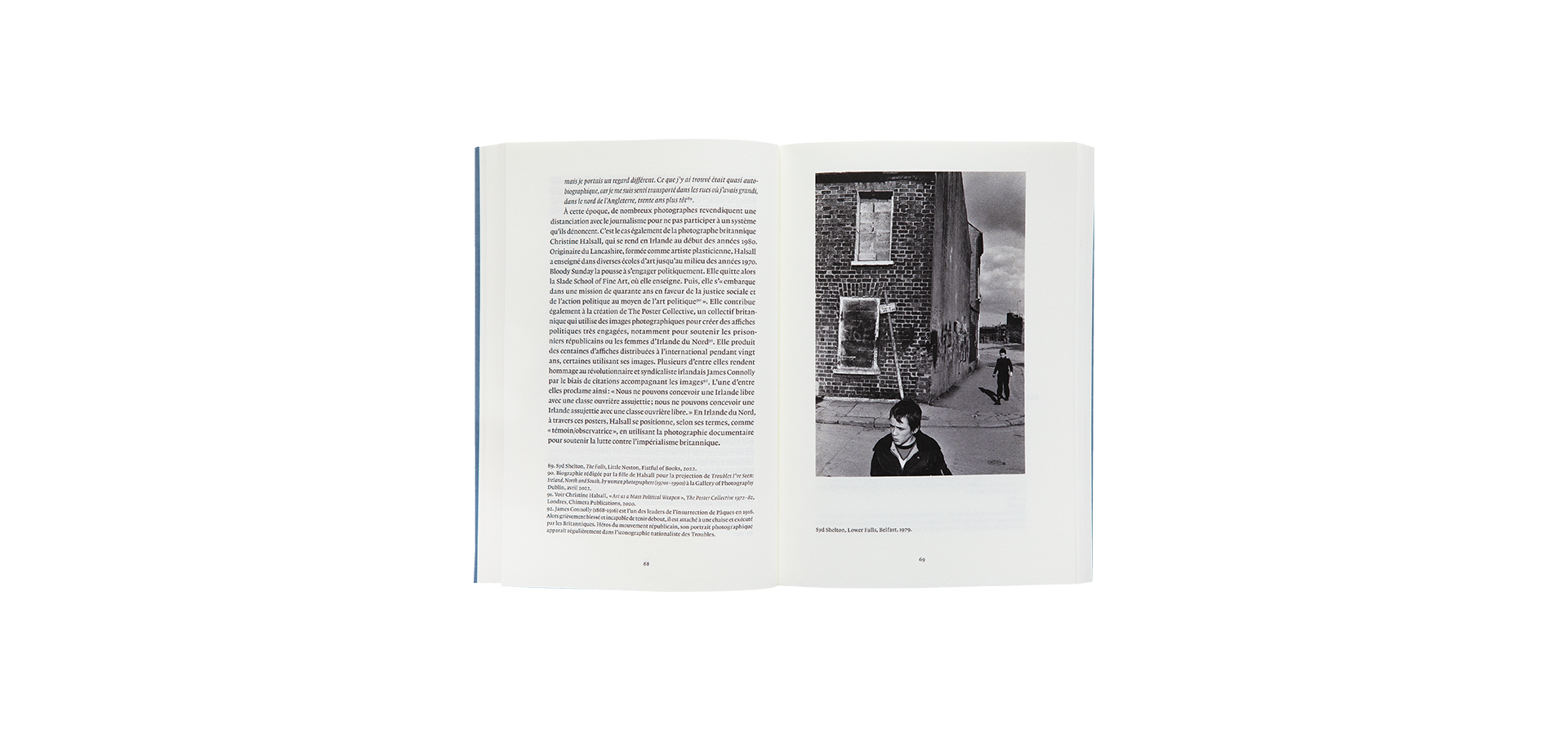
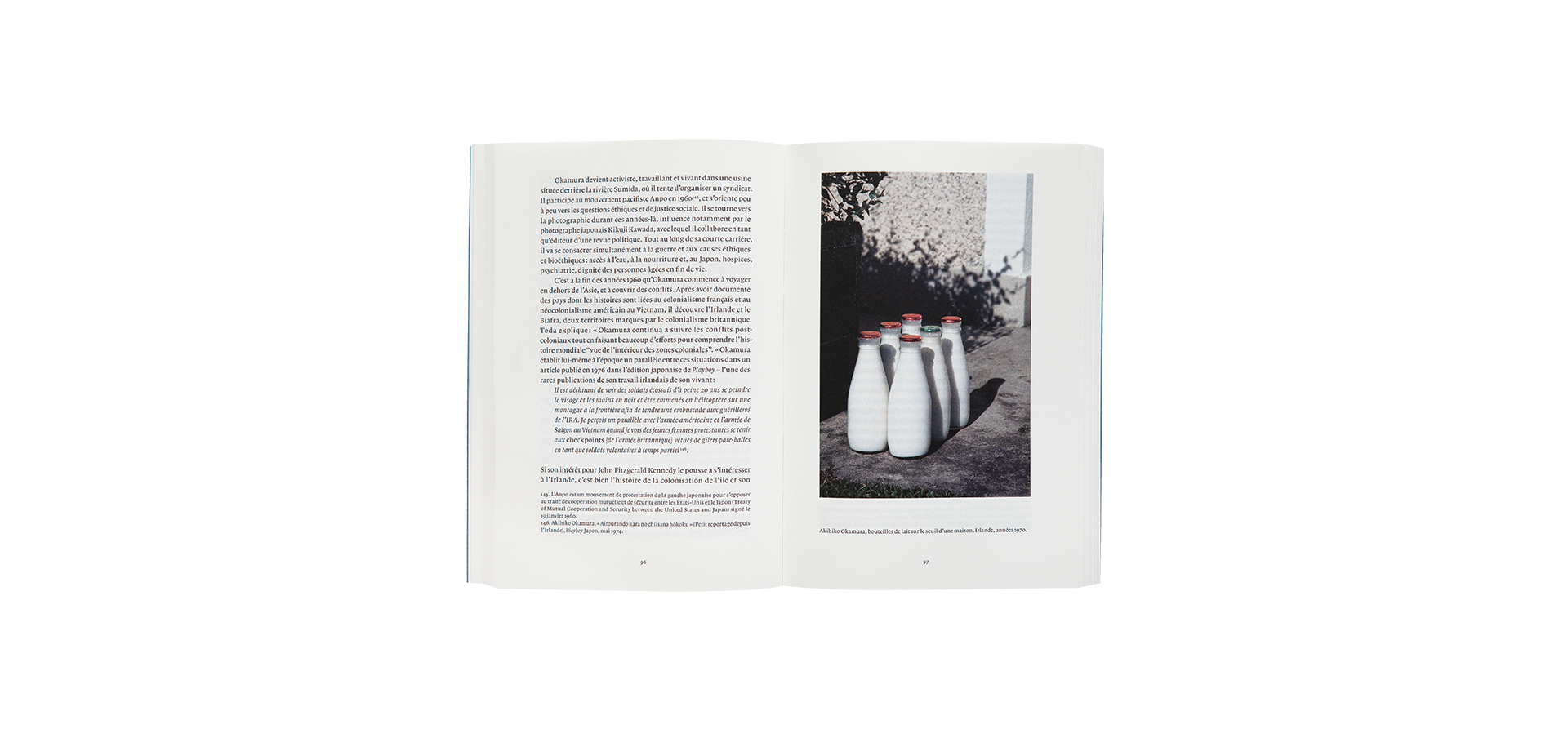
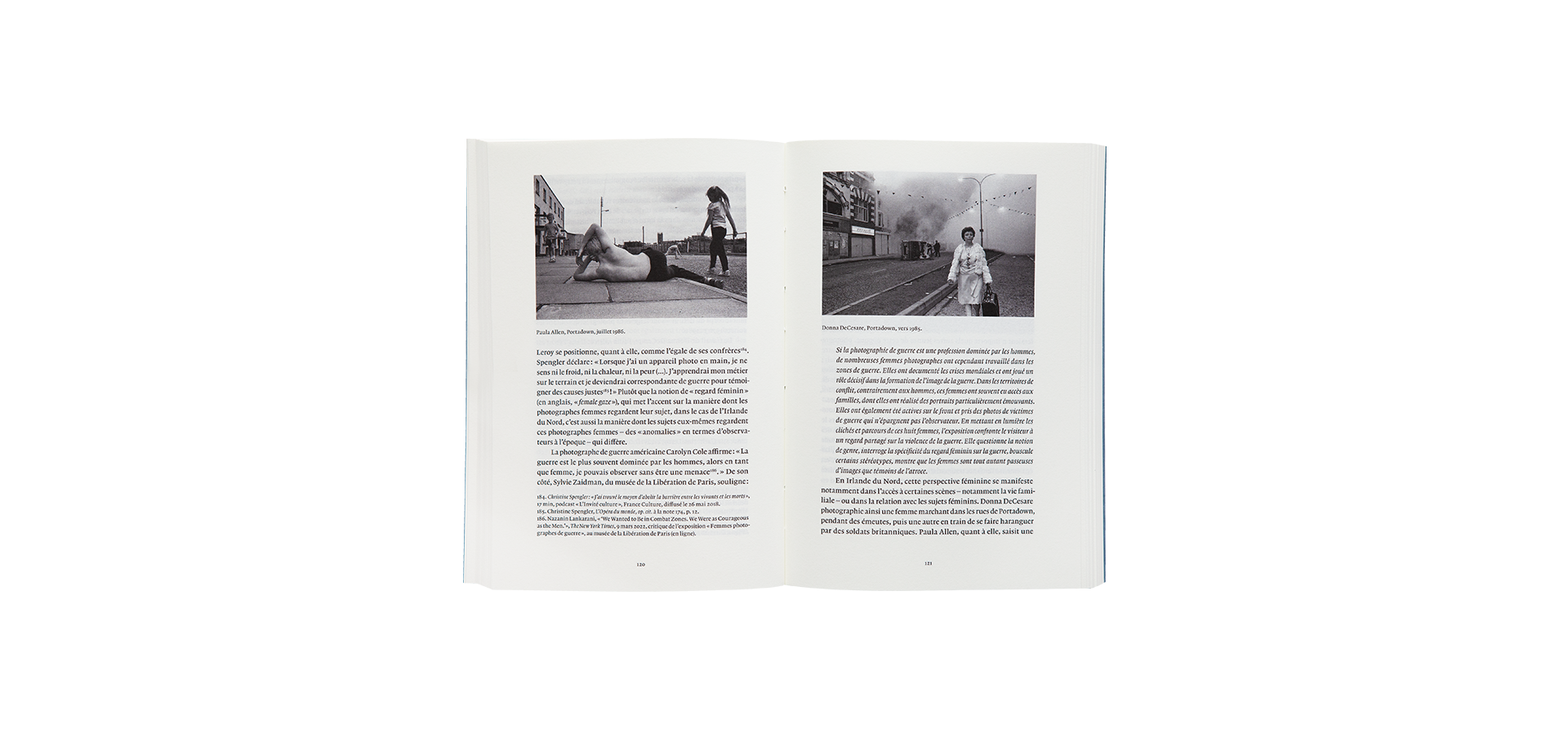
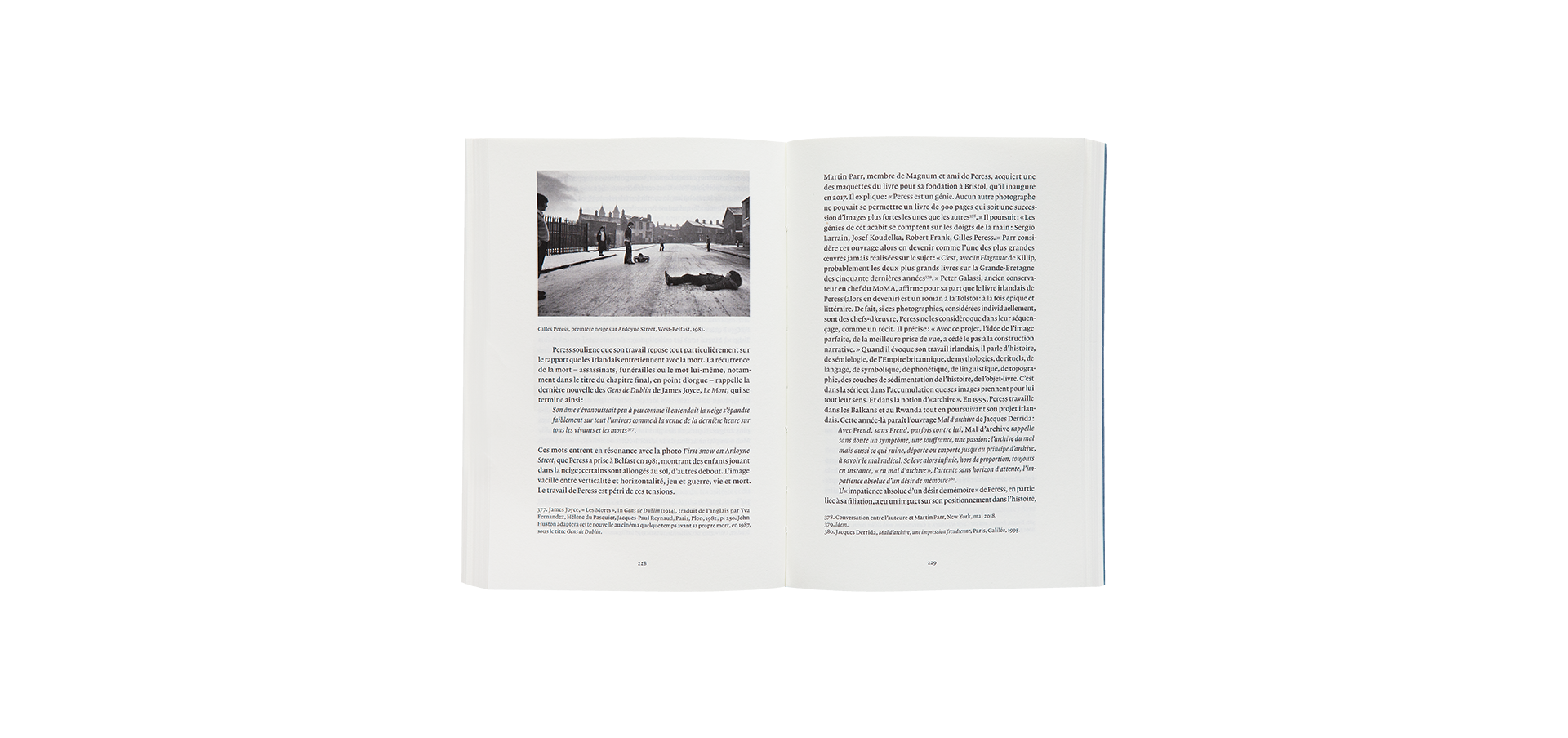
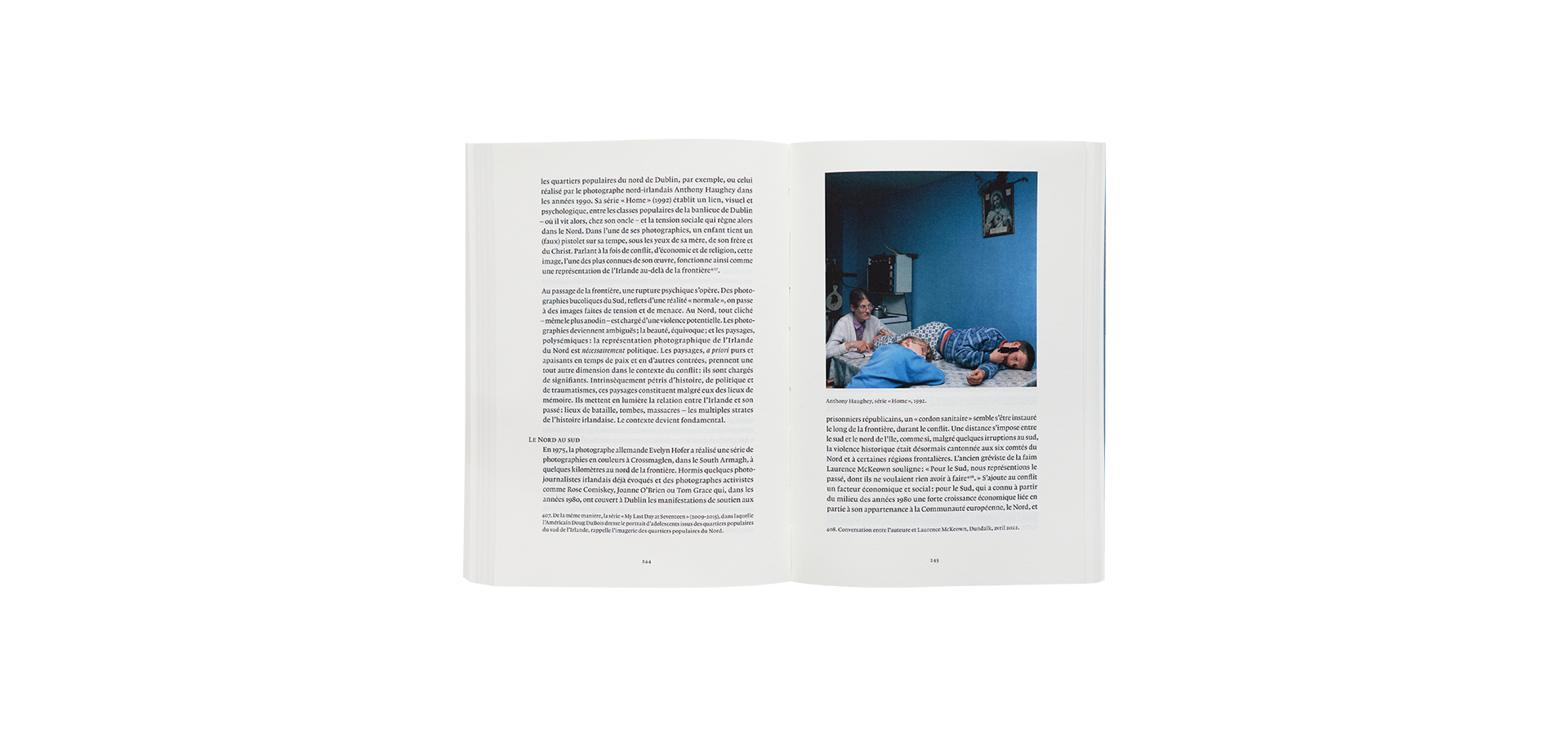
This seventh title in the TXT Collection, created in 2018 and edited by Agnès Sire, analyzes how this conflict gave rise to new ways of photographing. The uniqueness and geography of the Troubles changed the photographic approach of those who witnessed them. Pauline Vermare details the different methods, from photojournalism to more artistic creations, from a desire to document to a desire to remember, which feed into this “Irish photographic archive.” Focusing on key historical moments, including the Battle of the Bogside (1969), Bloody Sunday (1972), and the death of Bobby Sands (1981), the author weaves two parallel stories: that of photography and that of Ireland. This conflict saw the emergence of figures such as Gilles Caron, Don McCullin, and Gilles Peress, for whom Northern Ireland would occupy a central place in their work. Less widely circulated or more unexpected images are also highlighted, such as those by Akihiko Okamura, Rosalind Fox Solomon, and Frankie Quinn.
The book focuses on the emergence of new forms of visual representation that go beyond traditional journalistic codes to create new, more open languages. Photographers such as Paul Graham, Donovan Wylie, and Peress have produced important series that offer different, more contemporary interpretations of a conflict that still resonates today. Richly documented and illustrated, Un désir absolu de mémoire explores the power of photography as a tool for information, storytelling, and healing, and highlights its fundamental role in the construction of modern history.
For nearly thirty years, Northern Ireland was torn apart by one of the most violent conflicts of the 20th century in Europe, “The Troubles” (1969-1998), which claimed nearly 4,000 lives. These years of extreme tension gave rise to an exceptional body of work by photographers from around the world.
This seventh title in the TXT Collection, created in 2018 and edited by Agnès Sire, analyzes how this conflict gave rise to new ways of photographing. The uniqueness and geography of the Troubles changed the photographic approach of those who witnessed them. Pauline Vermare details the different methods, from photojournalism to more artistic creations, from a desire to document to a desire to remember, which feed into this “Irish photographic archive.” Focusing on key historical moments, including the Battle of the Bogside (1969), Bloody Sunday (1972), and the death of Bobby Sands (1981), the author weaves two parallel stories: that of photography and that of Ireland. This conflict saw the emergence of figures such as Gilles Caron, Don McCullin, and Gilles Peress, for whom Northern Ireland would occupy a central place in their work. Less widely circulated or more unexpected images are also highlighted, such as those by Akihiko Okamura, Rosalind Fox Solomon, and Frankie Quinn.
The book focuses on the emergence of new forms of visual representation that go beyond traditional journalistic codes to create new, more open languages. Photographers such as Paul Graham, Donovan Wylie, and Peress have produced important series that offer different, more contemporary interpretations of a conflict that still resonates today. Richly documented and illustrated, Un désir absolu de mémoire explores the power of photography as a tool for information, storytelling, and healing, and highlights its fundamental role in the construction of modern history.
TXT Collection
directed by Agnès Sire
Softcover, 14.5 x 21 cm
384 pages
Around 70 color and B&W photographs
Text
Pauline Vermare
Photographs
Collective
43 photographers including Gilles Caron, Megan Doherty, Rosalind Fox Solomon, Paul Graham, Catherine Leroy, Frankie Quinn, Gilles Peress, Donovan Wylie, and others
This book received support
from Maison Hermès.
 you may also like
 see the whole catalog